The Limbu
Who we are
The people call themselves Yakthung; the state, the census and the world call them Limbu. Both names, and the country they belong to, have documented histories.
The names
The people’s own name for themselves is Yakthung (also Yakthumba, Yakthungba). Limbu is an exonym of uncertain origin which became the state’s name for them and which Limbus now use themselves. Subba began as an administrative title granted by the Shah state to Limbu village headmen and became, for many families, a surname — as English Wikipedia’s article on the Limbu people puts it, “Subba was not part of the indigenous Limbu terminology, but now the two terms are almost interchangeable” Limbu people C.
In Sikkim the official spelling is Limboo. A state notification of 27 August 2018 (No. GOS-32/SJE&WD/WD/2018) formally records that “Limboo, Subba, Tsong, Yakthungba and Limbu” all denote the same community Government of Sikkim 2018 A.
The distinction matters for a clan record. Because “Limbu” and “Subba” were written onto citizenship papers in place of real thar names, a great many families appear in the state’s documents under an ethnonym or a title rather than under the clan name they actually carry Ninglekhu/ku heritage documentation project 2026 C.
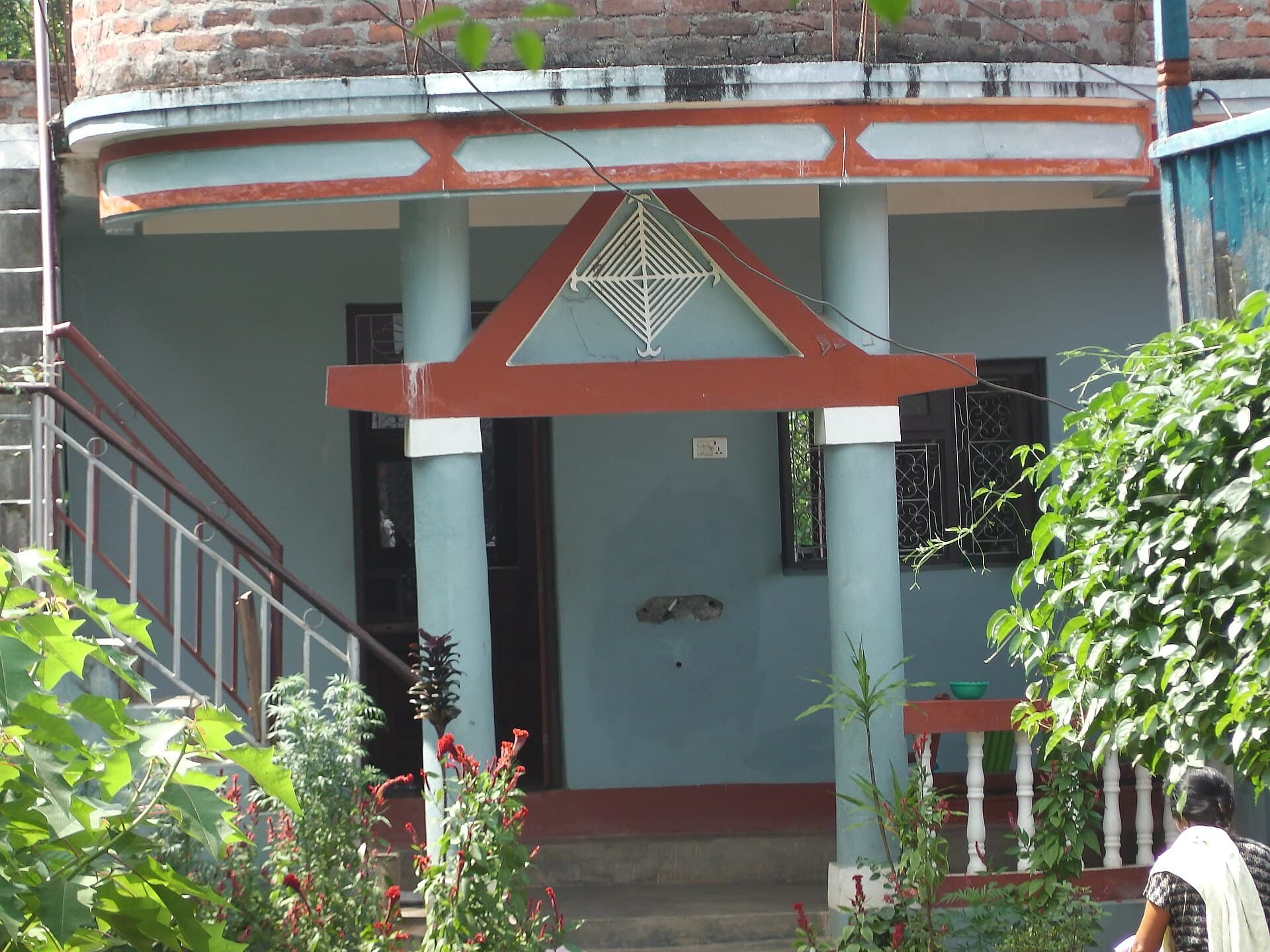
A Silam Sakma on a Limbu home in Mathlo Gaon, Panchthar. The photograph documents a modern expression of Limbu identity; it does not identify the household as Ninglekhu/ku.

414,704
Limbus in Nepal, 2021 census
1.42%
of Nepal’s population
93%
of them live in Koshi Province
53,703
Limboos in Sikkim, 2011 Census of India
The numbers
Nepal’s 2021 census counted 414,704 Limbus — 1.42% of a national population of 29,164,578, and the fourteenth-largest group in the country. Of these, 387,515 (93%) live in Koshi Province, where they form 8.01% of the provincial population National Statistics Office, Nepal 2021 A.
In India the best-sourced figure is 53,703 Limboos in Sikkim at the 2011 Census of India, out of a Sikkimese Scheduled Tribe population of 206,360 Ninglekhu/ku heritage documentation project 2026 C.
District figures, the census series back to 1991 and the mother-tongue counts are set out on Limbus today.
Negative finding
CThe Indian figures outside Sikkim could not be traced to a census table
Figures for West Bengal (c. 56,000), Assam (c. 37,000) and other Indian states circulate widely, but none of them could be traced back to a primary census table in this research. They are reported here as approximate; the Sikkim figure is the firmer of them Ninglekhu/ku heritage documentation project 2026.
Where Limbuwan is
The homeland is Limbuwan, also called Pallo Kirat (“far Kirat”): the country east of the Arun river, bounded by the Mechi in the east and reaching north to Kanchenjunga. Today it is the eastern districts of Koshi Province Ninglekhu/ku heritage documentation project 2026 B.
West of the Arun lies Majh Kirat (Khambuwan), Rai country; further west again, Wallo Kirat. That three-fold division is itself a legacy of how the Gorkha state described the eastern hills — an administrative description that became a geography Ninglekhu/ku heritage documentation project 2026 B.
The historic districts of Limbuwan — the thums — are set out on Limbuwan.
Note
Kirat is not one people
Limbu, Rai (Khambu), Yakkha, Sunuwar and Lohorung share a family resemblance and a great deal of history, but they are distinct peoples with distinct languages, festivals and terms. This site does not describe Rai practice as Limbu practice, and says so wherever a widely repeated claim crosses that line Ninglekhu/ku heritage documentation project 2026 B.